India’s logistics sector is undergoing a massive transformation, and at the heart of it lies Artificial Intelligence (AI). Once dominated by manual processes, paperwork, and unpredictable delays, logistics is now becoming smarter, faster, and more efficient.
For exporters, importers, and global trade businesses, this shift is not just technological, it is strategic.
Let’s explore how AI is reshaping logistics in India and what it means for your business.
Why Logistics in India Needed AI
India’s logistics costs are estimated at 13–14% of GDP, significantly higher than global benchmarks. (Indian Transport & Logistics)
Challenges like:
- Fragmented supply chains
- Delayed deliveries
- Poor demand forecasting
- High last-mile costs
have historically slowed down trade efficiency.
AI is now stepping in to solve these inefficiencies by turning logistics into a data-driven, predictive system instead of a reactive one.
What is AI in Logistics?
AI in logistics refers to the use of technologies like:
- Machine Learning
- Computer Vision
- Predictive Analytics
- Robotics
These tools analyze real-time data such as traffic, weather, order volumes, and inventory levels to optimize decision-making.
In simple terms: AI helps logistics companies predict, automate, and optimize every step of the supply chain.
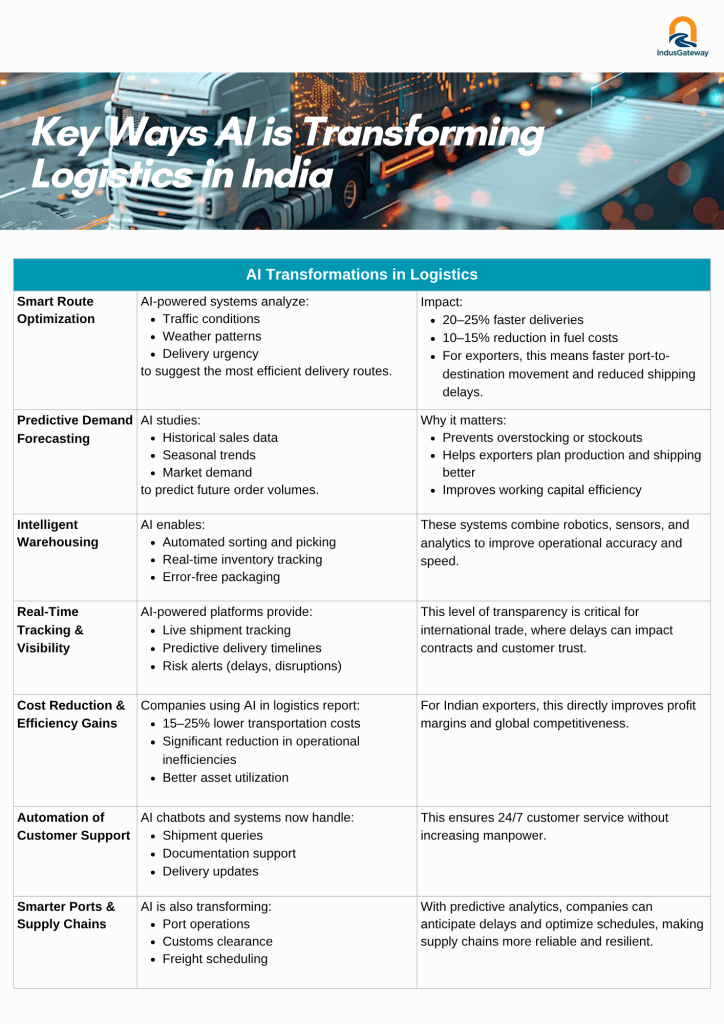
AI and the Future of Indian Logistics
Looking ahead, the role of AI in Indian logistics is expected to grow even further. As technology evolves, we are likely to see more autonomous systems, deeper integration across supply chains, and even smarter decision-making tools. The logistics ecosystem is gradually shifting toward being predictive rather than reactive, allowing businesses to anticipate challenges and respond proactively.
The future of logistics in India is:
- Predictive (forecasting demand and disruptions)
- Autonomous (self-operating warehouses and vehicles)
- Integrated (connecting suppliers, transporters, and buyers seamlessly)
Challenges to Consider
That said, the transition is not without its challenges. Implementing AI requires investment, both in technology and in training. There are also concerns around data security and the integration of new systems with existing infrastructure. However, as adoption increases and technology becomes more accessible, these barriers are steadily reducing.
What This Means for Exporters & Importers
For exporters and importers, the message is clear. AI is not just a technological upgrade, it is a strategic advantage. Businesses that embrace AI-driven logistics are better positioned to reduce costs, improve efficiency, and meet the growing demands of global trade.
In short, AI is turning logistics from a cost center into a competitive advantage.
Conclusion
AI is no longer a futuristic concept, it is already transforming logistics in India at every level. From warehouses and delivery routes to ports and customer service, AI is creating a more efficient and reliable ecosystem for trade.
For exporters and importers, adopting AI-enabled logistics partners is no longer optional—it’s essential to stay competitive in a fast-moving global market.